

Maxim Kischine's starting weapon. A piercing sawblade that orbits the character, then flies forward and slides along walls.
Discus spawns a sawblade that orbits Maxim once, then snaps toward the direction he is facing and slides along walls until it expires. Two seconds of pierce, three projectiles by level 7, and a 30% crit chance with a 3x multiplier baked into the base stats.
That 30% by 3x crit profile is the buried lede. According to the wiki, no other Ode to Castlevania starter ships with crit numbers this generous. Stack a single Luck source and Discus is rolling crits on roughly half of every wall-skipping pass.
The build context is the OTC roster's shield-evolution loop. Discus shares the Parm Aegis evolution gate with Iron Shield, and the wiki specifies that Discus can also be picked from Coat of Arms on non-Maxim runs as a vampire-killing tool roll.
This guide covers the orbit-and-throw mechanic, the Maxim Kischine build that turns the crit numbers into reliable boss damage, the Parm Aegis gate to Stellar Blade, and the Speed-floor warning that catches new Discus players.
Discus, a Normal-type weapon from the Ode to Castlevania DLC. Orbits, then flies forward and slides along walls. Stellar Blade at level 8 with a max-level
  Parm Aegis.
 Spinach,
  Duplicator, and
  Empty Tome for damage, projectiles, and cooldown.
Discus fires on a 4-second cycle that drops to 3.4 seconds at max level. The wiki notes that each projectile is a piercing sawblade that spins once around Maxim before snapping toward his faced direction. After the orbit, the blade flies forward and, if it hits a wall, slides along the wall edge until Duration expires.
That wall-sliding behavior makes Discus the strongest base weapon for stages with tight corridors. Library of Ruina, Dracula's Castle, and the Tides of the Foscari corridor maps all benefit from the wall-following pattern, since the blade keeps tagging enemies that hug the geometry.
The 30% base crit chance multiplied by the 3x crit multiplier is roughly equal to a +60% effective damage boost before any Luck stacking. In actual play, this is the reason Discus punches above its base damage of 10 in mid-game scaling. Pool limit is 100, which is generous enough that high-Amount stacking rarely caps out.
Face the direction you want Discus to hit before the cycle fires. The orbit phase only damages enemies briefly, while the forward-flight phase is where the blade spends most of its damage budget. Standing still mid-cycle lets you aim the blade at the next wave instead of behind you.
| Stat | Value |
|---|---|
| Type | Normal (vampire-killing tool; rolls from Coat of Arms) |
| Base damage | 10 (25 at max level) |
| Max level | 8 |
| Area | 0.6 base (+40% by level 8) |
| Cooldown | 4.0 seconds (3.4 seconds at max) |
| Duration | 2.0 seconds |
| Amount | 1 base (3 at max) |
| Projectile interval | 0.3 seconds |
| Speed | 1 (locked above -100%) |
| Pool limit | 100 |
| Chance | 30% crit |
| Critical multiplier | 3x |
| Knockback | 2 |
| Pierce | Area of Effect |
| Blocked by walls | Yes (slides along instead) |
| Starting weapon for | Maxim Kischine |
| Unlock | Level 5 (or balcony spawn over Library, once Scorpion Gate is unlocked) |
| Evolves with | Parm Aegis (max) |
The +5 base damage gains at levels 2, 5, and 8 are the biggest single-level jumps. Per the wiki, level 5 is also when the weapon technically unlocks for selection in future runs, so reaching level 5 before bailing on a Maxim run is the first goal.
Discus evolves into Stellar Blade at level 8 with a max-level Parm Aegis in inventory. The wiki shares the Parm Aegis gate between Discus and Iron Shield, which means the same defensive passive unlocks two different Castlevania-DLC weapons.
The implication for unlock priority: if both Discus and Iron Shield are in the run, evolve the one whose character-unlock chain you still need. Discus does not unlock a character by evolving; Iron Shield unlocks Mina Hakuba. For Maxim Kischine runs, the Stellar Blade evolution is the damage payoff, not an unlock path.
| Base | Passive needed | Becomes |
|---|---|---|
| Discus (Level 8) | Parm Aegis (max) | Stellar Blade |
If you are sharing a run between Discus and Iron Shield, the Parm Aegis can only feed one evolution per run because the passive caps at max level once. Pick which weapon takes the slot before minute 12, then commit.
Maxim runs lean into the crit profile and the wall-sliding pattern. The build wants damage scaling, more projectiles, and tighter cooldowns, then defensive support to survive the close-range orbit phase. The Parm Aegis gate doubles as that defensive support.
 Maxim Kischine (starts with Discus; his stat curve rewards weapons that pierce and ricochet)Parm Aegis (evolution gate plus survivability while Maxim is in the orbit phase)Spinach (Might scales the +5 damage gains from each level; Spinach plus level 8 hits hardest)Duplicator (Amount adds projectiles past the level-7 cap of 3)
 Candelabrador (Area lets the orbit clip more enemies and widens the forward-flight hitbox)
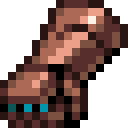 Bracer (Projectile Speed helps the blade reach the next wave faster without pushing into the -100% floor)
In our testing, this build is online by minute 9 if Parm Aegis shows up in the first three level-up screens. The 30% crit chance does most of its work between minute 12 and 22, when waves stack tight enough that the wall-sliding pattern catches multiple enemies per pass.
Discus does not have flagged green-check passive synergies on the wiki. Per the wiki effects block, the weapon scales through standard stats: Might, Area, Amount, Cooldown, and Duration all increase output the usual way. That makes the build wide rather than narrow.
Luck is the standout because of the 30% base crit chance. Skull O'Maniac and Tirajisu both push Luck into Discus territory, where every Luck point increases the effective crit rate. Combined with the 3x crit multiplier, this is a stronger payoff than the same Luck stacking on most weapons.
Wicked Season (XIII) is the best arcana for Discus on most stages. Across multiple runs, the arcana's seasonal stat rotation favors the weapon's broad stat profile, since Discus benefits from Might, Area, Duration, and Cooldown in roughly equal measure. Heart of Fire (XIX) is the alternative when the run leans on damage spikes.
Discus and Shuriken are both Ode to Castlevania DLC piercing-projectile weapons that throw multiple blades per cycle. The wiki notes that Discus orbits first then flies forward, while Shuriken fires immediately in a spread pattern.
Pick Discus when the run runs Maxim Kischine or when the stage has heavy wall geometry that benefits from the wall-sliding mechanic. Pick Shuriken when raw projectile count matters more than wall interactions. Per the wiki, both can also roll from Coat of Arms in non-Castlevania-character runs. In practice, builds that want both can run them side by side since they share no evolution passives.
Discus is part of the Ode to Castlevania DLC, which Poncle released on 31 October 2024. The weapon is a direct reference to the discus throwers from Castlevania: Symphony of the Night and Castlevania III: Dracula's Curse, where Maxim Kischine wielded similar circular blades as a sub-weapon. The wiki notes Maxim was added in the same Ode to Castlevania update and starts with Discus as a direct callback to that source material.
The wall-sliding behavior is shared with very few other weapons in the entire game. Per the wiki, the only other base-game projectile with similar pathing is Carrello in the version 1.6 patch, which means Discus has a near-unique movement pattern across the whole roster.
Explore the passives that scale Discus, the Castlevania DLC weapon roster, and the tier list for where this sawblade weapon lands.
Game data and screenshots adapted from vampire.survivors.wiki, used under CC BY-NC-SA 3.0. Original content remains the property of the wiki contributors and Poncle.