
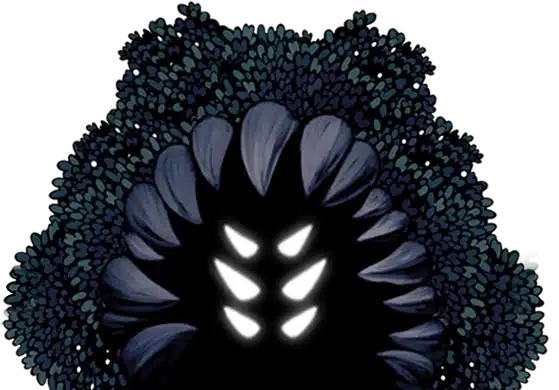
The hooded warrior in Greenpath who hands the Knight a bestiary, names them "tiny squib," and only reveals his full body once the Hunter's Journal is complete.
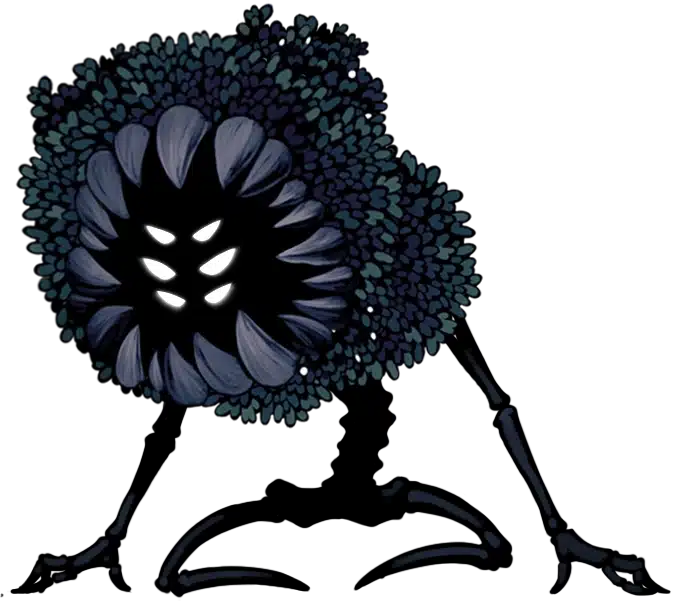
The Hunter is the only NPC in Hollow Knight whose body is a magic trick. According to the wiki, what looks like a darkened cave around his head is actually the hood of a tall, thin figure, and the rest of him only drops into view at the moment he hands over the Hunter's Mark.
Per the wiki, he is a Quest NPC tucked into the east side of Greenpath, above the Stone Sanctuary. His one job is to give the Knight the Hunter's Journal, a bestiary that fills in as the Knight kills enemies across Hallownest. He calls the Knight "tiny squib" and tasks them with proving themselves worthy to bear his mark.
The wiki specifies that he hunts alone because his siblings hunted each other in the nest when he was young. He regards the bugs of Hallownest as weak, eats whatever he can kill (including Infected enemies, which he dislikes the taste of), and waits for his next hunt once Hallownest falls.
This guide covers the Hunter's Greenpath lair, the Hunter's Journal bestiary mechanics, the "tiny squib" dialogue thresholds, the Hunter's Mark and True Hunter achievement, the hooded-body reveal moment, the Brooding Mawlek roar he shares, and the lore that puts him at the edges of Hallownest by choice.
The Hunter, a hooded Quest NPC who gifts the Hunter's Journal bestiary.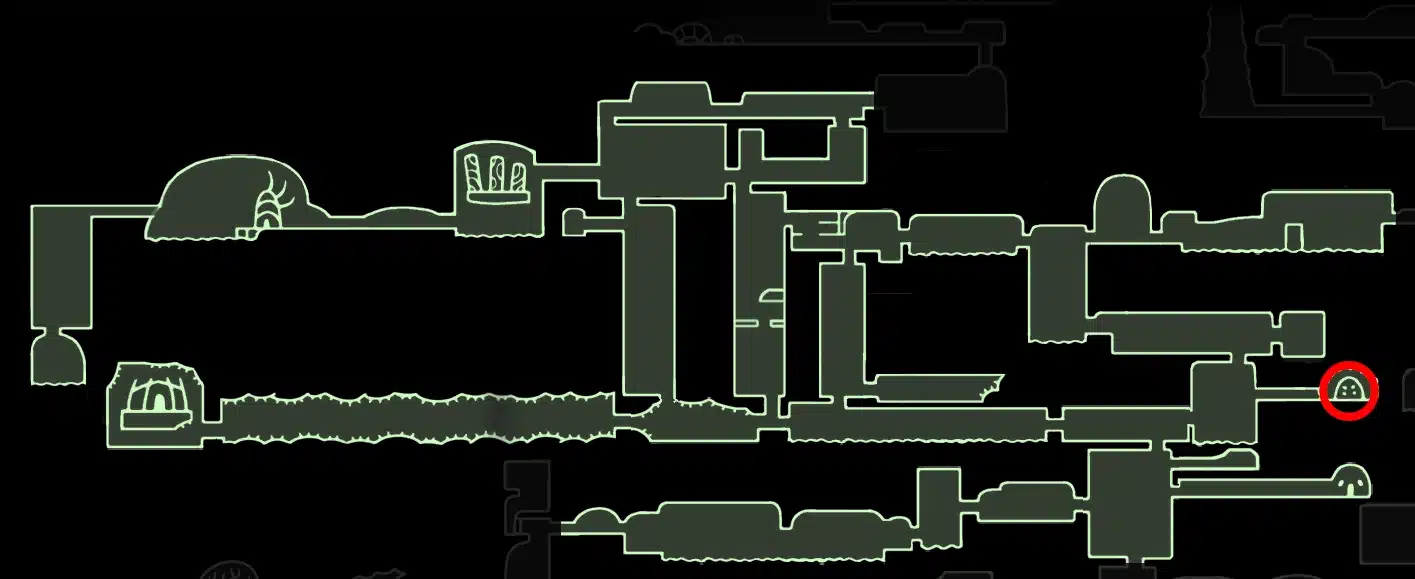 East Greenpath, above the Stone Sanctuary, in a dark enclosure that turns out to be his hood.
 The Hunter's Journal, a bestiary that fills in entries as you defeat each enemy type in Hallownest.
 The Hunter's Mark plus the True Hunter achievement after completing every required journal entry.
The Hunter exists at the edges of the kingdom, on purpose. Per the wiki, he hunts alone because his brothers and sisters used to hunt each other in the nest when he was young. The wiki opens his lore section with the line "When I was young, my brothers and sisters and I would hunt each other in the nest. Now I hunt alone," and that single sentence does most of his characterisation in two short clauses.
According to the wiki, he tries to kill any living being he can find, only for his own sake, because he believes that is the nature of the Hunt. The wiki notes that he attempts to eat his prey too, including Infected creatures, though he does not like the taste of those.
The wiki specifies that he looks down on the bugs of Hallownest as weak and pathetic, with their kingdom destined for ruin. After the Journal is complete he simply bides his time until the next hunt begins, because he believes a true Hunter has no home or kingdom. He is not waiting for the Knight to save Hallownest; he is waiting for it to fall.
The Hunter sits in a single, easy-to-miss room on the east side of Greenpath, above the Stone Sanctuary. Per the wiki, his location is fixed and he does not move at any point in the run, which makes him one of the most stationary major NPCs in the game.
The room itself is dim. According to the wiki, the visible "cave" around the Hunter's head is not a cave at all. It is the inside of his hood, and the rest of his body is hidden in shadow on the other side of the screen. New players read the composition as "lone bug peering out of a wall," and the reveal at the end of the quest weaponises that assumption.
The wiki notes that when the Knight first approaches him, he roars menacingly. The roar is loud enough that most players back away on instinct the first time. Only if the Knight keeps walking forward does he speak, hand over the Hunter's Journal, and start the quest.
Visit the Hunter as early as possible in a run. The Hunter's Journal is back-fillable, so every enemy you kill before picking it up still counts retroactively, but the journal entries themselves only unlock after you have the book. In actual play, late-pickup runs often miss the first batch of unlock notes because the Knight already over-killed the early-game enemies before opening the book.
The Hunter's Journal is the on-ramp to the Hunter's Mark. Per the wiki, the journal is a bestiary that tracks every enemy in Hollow Knight, with new entries unlocking as the Knight defeats each type. Completed entries get a different border around their icons, which is the at-a-glance signal that an enemy is fully recorded.
According to the wiki, defeating a specified number of each enemy unlocks additional notes from the Hunter about that enemy. The notes blend bestiary detail, combat technique tips, and small bits of Hallownest lore. Some entries can only be obtained by inspecting a specific object or by completing a particular challenge rather than by killing.
The wiki specifies that DLC enemies do not count toward the Hunter's Mark. That includes Grimm Troupe and Godmaster additions; the Mark is gated on the base-game required list only. After multiple runs, this is the most common reason players think they are stuck on the last entry when they are actually finished. The required-versus-optional split shakes out like this:
| Entry type | Counts for Mark? |
|---|---|
| Base-game required enemies | Yes |
| Base-game optional creatures (Menderbug, etc.) | Yes, if listed |
| Grimm Troupe enemies | No |
| Godmaster Pantheon-only enemies | No |
| Inspect-only entries | Yes (use the Dream Nail or interact) |
Completing the journal triggers the only proper Hunter cutscene in the game. Per the wiki, returning to the Hunter after every required entry is filled awards the Hunter's Mark and the True Hunter achievement. The Mark itself is a lore charm-piece; the wiki specifies that it carries no gameplay buff and is not equippable.
According to the wiki, the reveal plays like a feint. Before the Mark is handed over, the ground below the Knight collapses, the camera pulls back, and it is revealed that the dark enclosure around the Hunter's head was actually his hood the entire time. The rest of his body extends down as a tall, thin figure, he roars again, and boss music briefly plays. The music then stops abruptly and he simply puts his hand out with the Mark in it. In real runs, this is the single best non-boss jump-scare in the game.
The wiki notes that the Hunter's farewell line frames his entire arc: "I have no offspring, nor subjects, nor worshippers. The sum of my being, my learning, my instincts... I leave it all to you. Good luck, Hunter." The Mark is the inheritance.
Stack the Hunter visit with a Keen Hunter pass first. Per the wiki, Keen Hunter unlocks at 100+ journal entries, well before the Mark, and it is the milestone most players hit organically. In actual play, the 100-entry visit is also where the Hunter's dialogue softens from "little squib" to "Ah ha! Your journal grows fat and full," which is the cleanest in-fiction confirmation you are on track.
The Hunter never stops calling the Knight "squib," but the tone shifts as the journal fills. Per the wiki, his before-Mark dialogue has five clean tiers tied to entry count, and each tier marks roughly how close the Knight is to the True Hunter achievement.
| Journal entries | What he says (paraphrased) |
|---|---|
| First encounter | "Tiny squib... You approach fearless. Are you a hunter like me?" He hands over the journal. |
| Fewer than 50 | "Little squib! You may have overcome a few creatures, but you are only just beginning." |
| 50 to 99 | "Ahhh... I knew I'd seen it right. That hunter's quality. Hallownest's creatures fall in your path." |
| 100+ (under the required total) | "Ah ha! Your journal grows fat and full. Only those last few, rare beasts remain." |
| All required entries complete | The body reveal triggers and he hands over the Hunter's Mark. |
The wiki specifies that the "squib" diminutive is consistent across every line until the Mark is awarded. He never uses the Knight's in-game name; he never compliments the Knight as a peer. The closest he gets is "hunter's quality," and even that is delivered as a passing observation. In practice, this small linguistic detail is the reason players come away reading the Hunter as a mentor who never fully respects the apprentice.
The Hunter shares assets with a much bigger Hallownest predator. Per the wiki, the roar he uses when the Knight first approaches him is the same audio cue as the Brooding Mawlek roar from Forgotten Crossroads. Most players do not notice on first listen, but anyone who has fought the Mawlek recognises it on a replay.
According to the wiki, if the Grimmchild charm is equipped when the Hunter roars, the Grimmchild flies out to attack him. The Grimmchild stops after a moment and the attack does no damage to the Hunter, but the brief targeting is the only time in the game an NPC dialogue trigger flags as a hostile event to a charm familiar.
The wiki notes a few other small details:
The Hunter ties into Greenpath, the Hallownest bestiary, and the wider Quest NPC line. These spokes pick up the connected threads.



Game data and screenshots adapted from hollowknight.fandom.com, used under CC BY-SA 3.0. Original content remains the property of the wiki contributors and Team Cherry.