
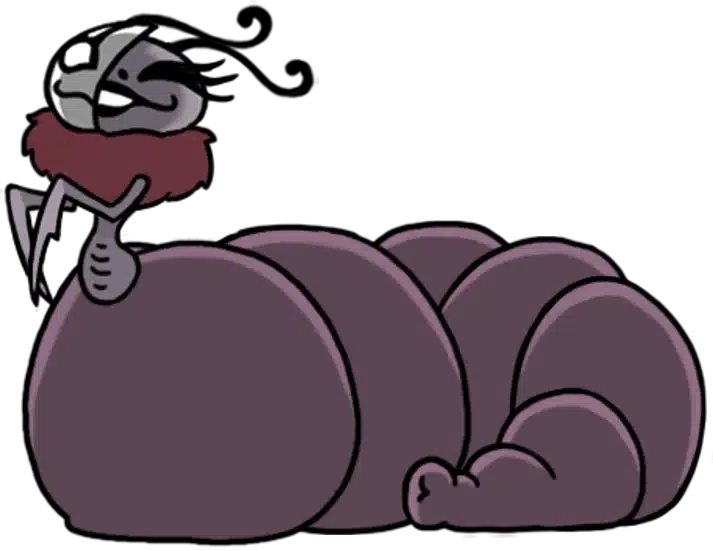
Not quite. It is a Metroidvania, but it borrows so much Souls DNA that the label keeps sticking.
The honest answer is no, not strictly. Hollow Knight is a Metroidvania at its core, built on exploration and movement upgrades rather than the stat builds and stamina of a true Souls game.
But the confusion is earned. It borrows the most recognizable Souls systems wholesale, starting with a death mechanic that works almost exactly like a Dark Souls corpse run.
Per the wiki, when you die you leave a Shade that holds your Geo and caps your Soul until you defeat it. Die again before reaching it and the first pile is gone. That is the Souls bloodstain, redrawn.
This page gives the verdict, lists exactly which Souls-like elements it shares, where it clearly differs, and who will enjoy it based on what they liked about FromSoftware games.
 A Metroidvania with heavy Souls-like influence. Shade death runs, benches, hard combat, cryptic lore. 2D platforming, no stamina, no stat builds.
 You loved the bonfires and bosses, less the loadout math.
Hollow Knight is a Metroidvania with Souls-like systems bolted on, and that hybrid is exactly why people argue about the label. The genre purist and the casual player can both be right.
The skeleton is pure Metroidvania: a connected 2D map, gated by movement abilities, that opens up as you grow stronger. You are not building a character with stats; you are unlocking traversal.
The feel, though, is Souls. The punishing combat, the death penalty, the rest points, and the story told through scraps all come straight from that school. Calling it a "Soulsvania" is the fairest shorthand.
If someone recommended Hollow Knight because you liked Dark Souls, they were not wrong. The death loop and boss design will feel instantly familiar, even in 2D.
This is where the comparison holds up. Hollow Knight copies the core Souls loop closely enough that the muscle memory transfers.
| Souls feature | Hollow Knight version |
|---|---|
| Corpse run | Die and a Shade holds your Geo until you beat it |
 Bonfires Bonfires | Benches rest, save, and respawn enemies |
| Pattern bosses | Tough, learnable fights like the Mantis Lords |
 Cryptic lore Cryptic lore | Story told through item text and scenery |
| No difficulty slider | One fixed challenge for everyone |
The death loop is the dead giveaway. Per the wiki, losing your Shade twice means losing the Geo for good, which is the same tension as a lost Souls bloodstain. Resting at a bench also respawns enemies, exactly like lighting a bonfire.
Strip away the feel and the mechanics underneath are not Souls at all. These are the differences that keep it in the Metroidvania genre.
There is no stamina bar, so attacking and dodging are never resource-limited the way they are in Dark Souls. There are no weapon or armor stat builds; your power comes from  Nail upgrades and
 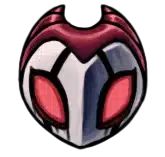 charms rather than leveling numbers.
Most of all, it is a 2D platformer. Movement abilities like the dash, wall jump, and double jump gate the world and demand precise platforming, which is a Metroidvania backbone Souls games simply do not have. The exploration, not the loadout, is the point.
Roughly, yes, and sometimes harder in specific fights. The main story is demanding but fair, and the optional endgame rivals the toughest Souls content.
The difference is texture. Souls difficulty leans on caution and resource management; Hollow Knight leans on execution and pattern reading, closer to a fast action game. In actual play, the late dream bosses and the Pantheons are pure reflex tests.
We break the full difficulty question down in our is Hollow Knight hard guide. The short version: the base game is beatable by most players, and the brutal stuff is optional.
Map your taste from Souls onto Hollow Knight and the fit is easy to predict. It rewards the same patience and curiosity.
If you loved the bonfire rhythm, the boss duels, and piecing together lore from item descriptions, Hollow Knight delivers all three. If what you loved most was the build crafting, stat optimization, and gear hunting, you will find less of that here.
For most FromSoftware fans it lands. The 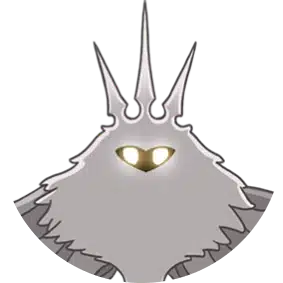 final bosses, the somber tone, and the sense of a dead world to uncover are squarely in Souls territory, just rendered in beautiful hand-drawn 2D.
If the Souls comparison sold you, these guides cover the bosses, the route, and what made the game such a hit.
Game data and screenshots adapted from hollowknight.fandom.com, used under CC BY-SA 3.0. Original content remains the property of the wiki contributors and Team Cherry.